The client sells a specialized service to large companies. A single button or discount code cannot close the deal; several people are involved before a decision, and the sales cycle is long. Yet the website mainly functioned as an online business card, while SEO success was measured by three keywords.
This is a common situation in B2B companies. The firm has expertise, but it is not visible on the website. A potential customer therefore cannot find an answer when they are still defining a problem or comparing possible approaches. This case study describes how we began building a content system. I have anonymized the client and do not publish commercial figures that I cannot substantiate publicly. This is not a promise of the same result for another company.
Starting point: the website existed, but the content process did not
At the beginning, we found several separate problems:
- SEO was evaluated only by the rankings of three terms.
- There was no broader map of the queries and topics customers address during a purchase.
- There was no editorial plan, topic owner, or regular distribution.
- It was unclear what counted as a lead, what was merely a signal of interest, and what we would report to management.
- The company’s content was not systematically connected with LinkedIn, sales, and paid distribution.
If we had simply ordered ten articles at that point, we would have added more material to a system that did not know what to use the content for.
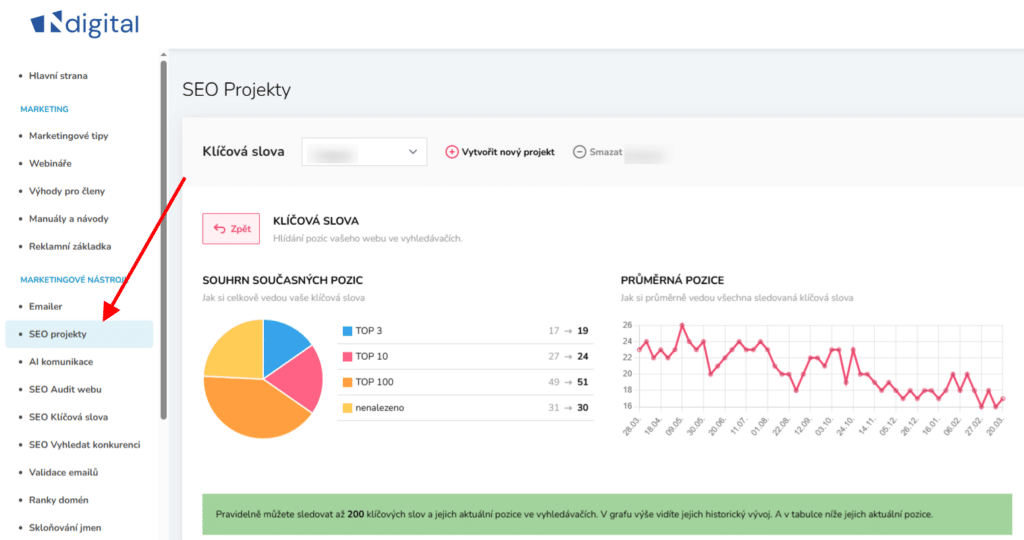
1. We mapped 124 relevant queries
The first major output was not an article but a database of 124 keywords and queries. The number itself is not the goal. What mattered was seeing the entire journey: general descriptions of the problem, expert approaches, comparisons of options, the buyer’s concerns, and terms close to the specific service.
For each topic we added intent, priority, current position, the appropriate page type, and its connection to the offer. One query belonged on a service page, another in a case study, and another in an explanatory article. This reduced situations in which several pages competed for the same task or an article brought visitors with no commercial connection.
2. We separated conversions from signals of interest
Originally, so-called hard conversions included a submitted inquiry, a click on a phone number or email address, and a longer stay on the contact page. In retrospect, I would not put these events in the same bucket.
- Business conversions: a submitted form and a verified contact whose quality can be assessed.
- Contact actions: a click on a phone number or email address. This is strong intent, but the click alone does not confirm that a conversation took place.
- Signals of interest: spending longer on the contact page, reading a case study, or returning to the website. They help with diagnosis; they are not leads.
- Visibility: queries, positions, impressions, and organic visits. They show whether we are building reach, not whether an order was created.
This distinction prevented a nice-looking report with an inflated conversion number. With a long B2B cycle, we still need to connect analytics with sales feedback. Otherwise, we do not know whether marketing brought in a relevant company or merely an accidental click.
3. Expertise became an editorial process
The company had plenty of experience; it simply was not ready for publication. We therefore created a process based on real customer questions and the capacity of people inside the company.
- We selected a priority persona and the decision they were currently addressing.
- We assigned the topic a primary query, related questions, and a target service page.
- We obtained examples, exceptions, and dead ends from an expert—not just general advice.
- The text went through both expert and editorial review.
- After publication, we connected it with relevant pages and prepared LinkedIn distribution.
- We updated the text according to data and sales objections.
For B2B, LinkedIn was a natural distribution channel, not an automatic guarantee of leads. We did not cut the article into five posts merely to create activity. Each output had its own point and linked to the next step only when that helped readers. I also describe some practical options in this overview of LinkedIn tools.
4. Technical SEO and internal links received the same priority as writing
Content cannot work when it is hidden several clicks deep, competes with a duplicate page, or has no connection to the service. We therefore adjusted topic architecture, headings, page titles, internal links, and indexing. We did not automatically delete older content. First we decided whether to update, merge, redirect, or retain it.
The main principle was simple: an informational article should explain the problem, a case study should provide proof, and a service page should offer a commercial next step. Links between them should follow this journey, not create a crawler’s web regardless of the person reading it.
5. Distribution was not just waiting for Google
Organic search takes time, and a narrow B2B topic may not have high search volume. We therefore distributed quality content through several channels:
- through relevant people’s LinkedIn profiles,
- in paid promotion of selected materials,
- in the sales team’s communications,
- through topical partnerships and relevant links,
- by repeatedly reminding people who had already shown interest of the brand.
Link building here did not mean buying a package of links. We looked for industry connections where the content genuinely complemented a partner’s audience. Paid distribution was not a substitute for a poor article; it helped put good material in front of a limited group of decision-makers.
6. We built reporting as a decision-making tool
Each month, we collected more than visits and rankings. The report combined several layers: visibility of topic groups, organic visits, behavior on important pages, contact actions, and sales feedback. We checked rankings continuously, but they became meaningful only in the context of the page and its intent.
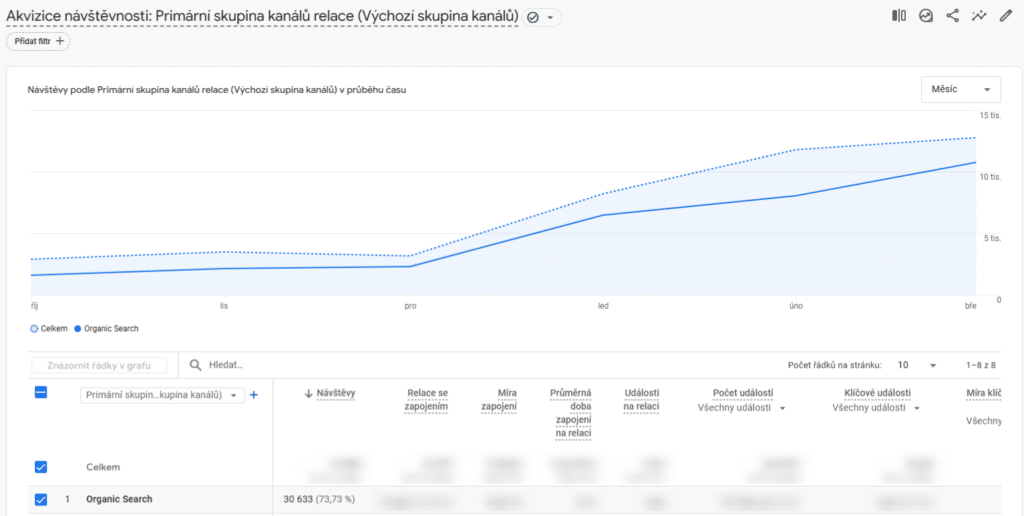
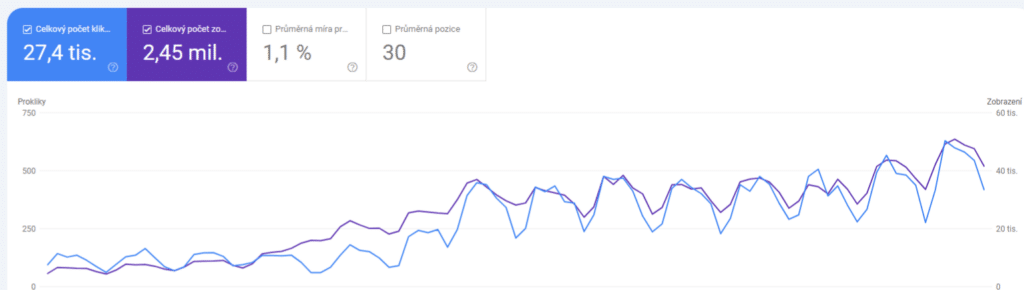
We used Google Analytics 4 for visits and events, Search Console for search data, and a custom overview for sales interpretation. If you are only starting to build measurement, begin with this practical Google Analytics 4 guide. The tool cannot replace defining what the company considers a quality inquiry.
What I would carry from this work into another B2B company
- Do not start with the number of articles. Start with a map of customer questions and business decisions.
- Do not merge leads and interest. A click, a longer visit, and a qualified inquiry are three different things.
- Get expertise from experts. An editor can transfer it, but cannot invent it.
- Plan for distribution. A narrow market may not generate enough organic visits on its own.
- Connect marketing with sales. Without information about contact quality, you are optimizing only forms.
- Give the system time, but not a blank cheque. Ongoing signals must show whether the hypothesis is developing in the right direction.
When this approach is not enough
Content marketing is not first aid for a company without a clear offer, one unable to respond commercially, or one that needs orders within a few days. In that situation, it is better to solve the offer, conversion path, and faster distribution channels first. Content can run alongside them, but it should not carry responsibility for everything.
In this project, the biggest change was organizational: individual texts became a process connecting experts, marketing, analytics, and sales. If you are dealing with a similar starting point, send me a link to your website through the contact page and briefly describe how you currently generate inquiries. I will tell you whether it makes sense to start with content, measurement, or somewhere else entirely.